
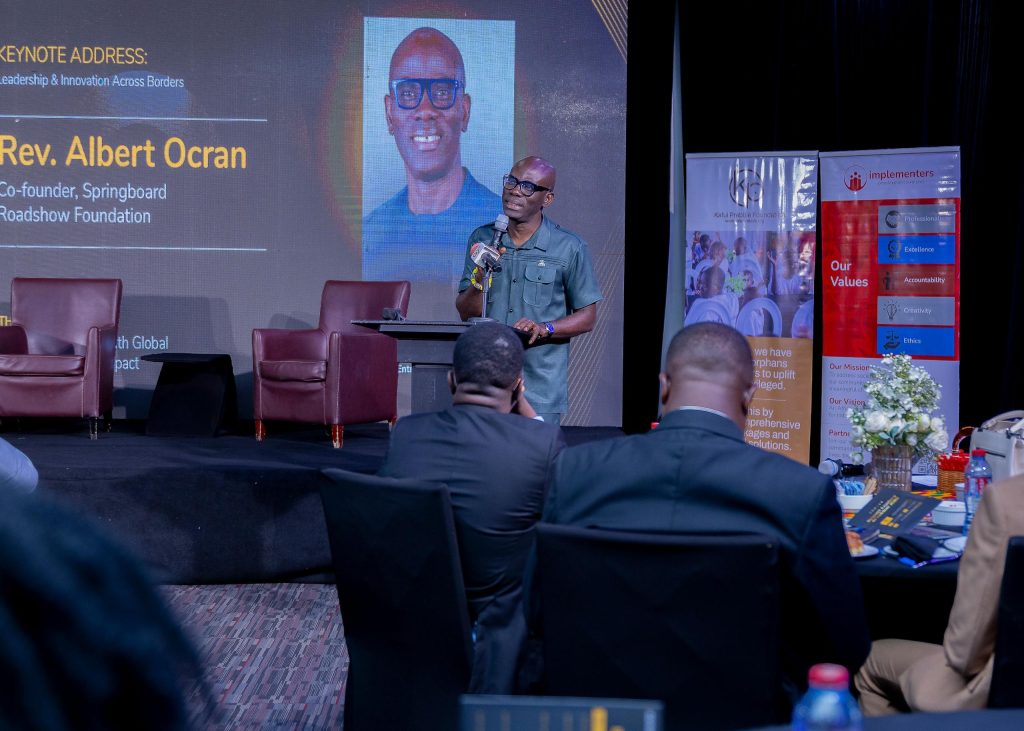
Co-founder of the Springboard Roadshow Foundation and an Executive Coach, Rev. Albert Ocran, has called for urgent action to remove bottlenecks stifling the agriculture and agribusiness sectors to enable the country to be at par with its compatriots across the continent.
According to him, although the agriculture and agribusiness sector ranks among the fastest-growing industries in Africa, it does not feature among Ghana’s own top five fastest-growing sectors, even though it remains the country’s largest employer.
“You visit a tea or coffee farm in Kenya or Morocco and it’s not just the plantation and processing but it’s also a tourist attraction. At a typical restaurant, in these countries, almost every item on the breakfast table is locally made. These are value chains we must begin to explore as we push ourselves to the next level in our journey as a country,” Rev Ocran said.
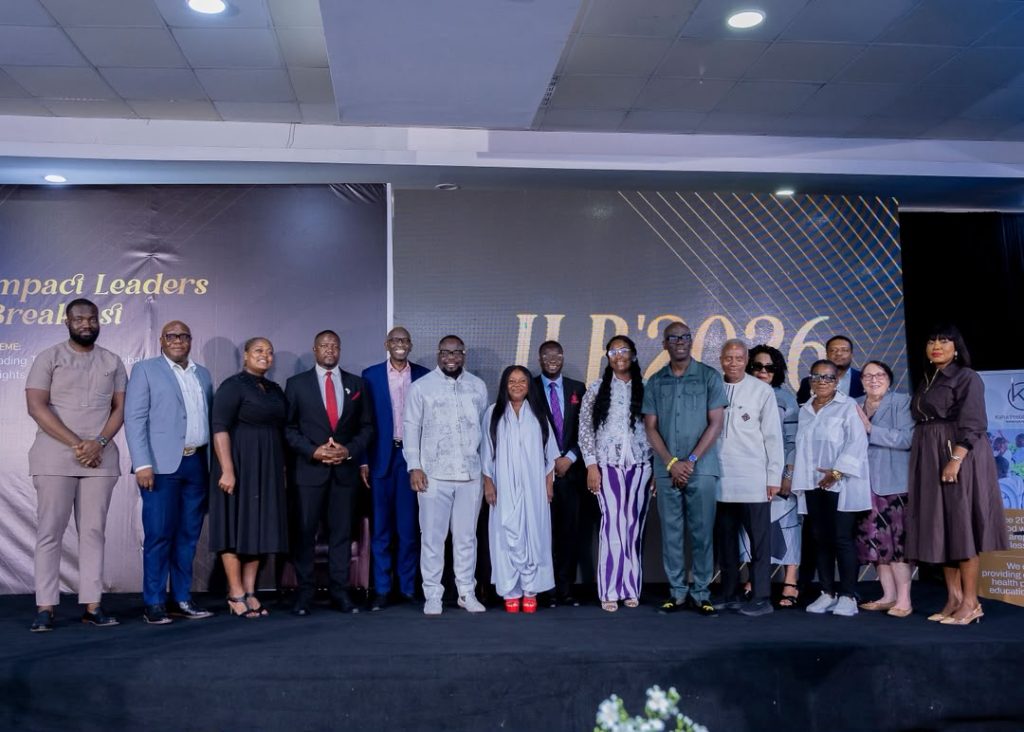
He was speaking in Accra today (August 12) at the Impact Leaders Breakfast (ILB) which was held on the theme: “Leading Together with Global Insight for Local Impact”.
The event is an exclusive forum that brings together business executives, investors, policymakers, entrepreneurs, development partners and innovators to inspire leadership, unlock investment and accelerate sustainable development.
Agribusiness Potential
Rev Ocran, who has been educating the youth on mindset change and work readiness through the Ghana Grows Program, said across the agric value chain, there are many opportunities that our Ghanaian youth are beginning to take advantage of. In the past few years, several interventions have been put in place opening the sector and creating jobs for young people.
He said stronger value chains would create opportunities for young farmers, entrepreneurs and businesses while helping the country compete more effectively with other countries on the continent. He also urged leaders at all levels to study successful models from other countries and adapt them to local realities. “
Additionally, he stressed on the need for leaders to understand the country’s demographics, communities and development needs before introducing solutions developed elsewhere.
“Ghana had significant opportunities in agriculture and agribusiness but unlocking them would require collaboration among government, businesses, investors, traditional leaders, young people and other stakeholders,” he said.
Other critical sectors
Touching on other critical aspect of the economy, Rev. Ocran identified information and communication technology (ICT), transport, storage and logistics, trade and repair of vehicles, mining and quarrying, and oil and gas as some of the country’s fastest-growing industries. “Information and communication technology, up 25 per cent in the first quarter of this year,” he said, adding that transport, storage and logistics followed with 13 per cent growth. He said trade and repair of vehicles recorded nine per cent growth and contributed 14.8 per cent to the economy, while mining and quarrying and oil and gas also remained important sectors.
The Convener of the Impact Leaders Breakfast and Chief Executive Officer of Prebbie Group, Kafui Prebbie, also said Africa needed to create opportunities for young people to start and grow businesses while building an ecosystem of investors capable of providing funding for promising entrepreneurs. “We need to bring together the ecosystem of investors so that we can invest in those people that we grow” he said. On technology, Mr Prebbie said artificial intelligence was changing the way businesses operated and stressed the need for people to learn how to use the technology ethically.
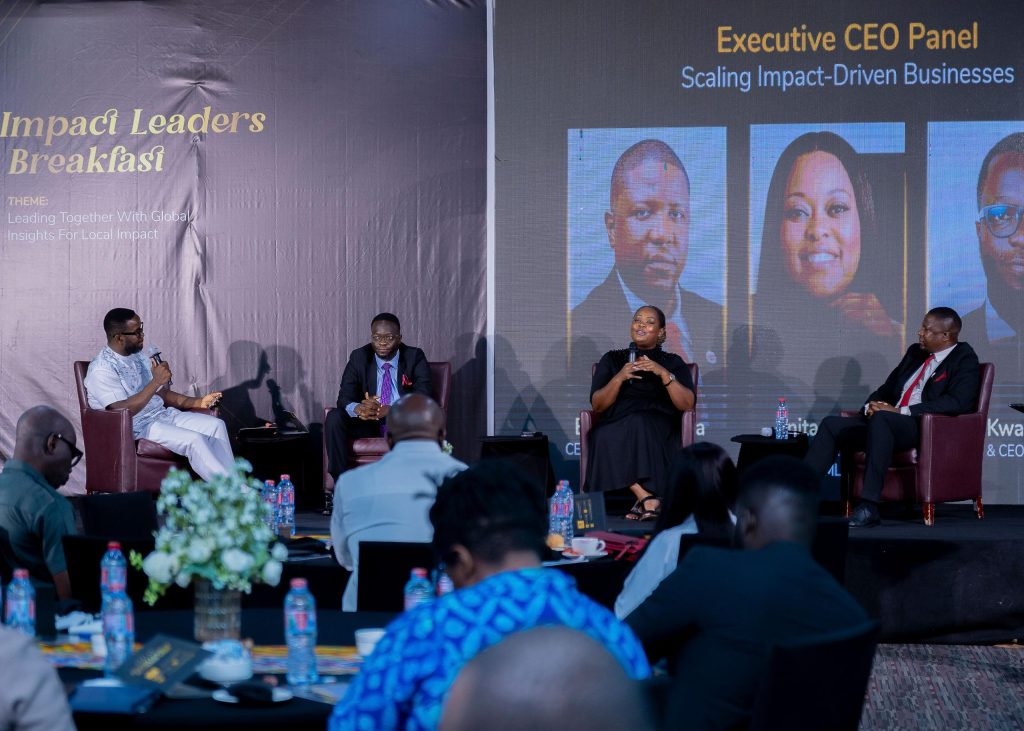
Panel discussion
During a panel discussion, the Founder and Chief Executive Officer of OML Africa, Anita Wife-Asinor, said African businesses needed stronger systems for identifying, developing and retaining talent.
She said businesses often focused on recruiting workers without putting adequate systems in place to assess, develop and retain them.
“We have to define actually the team we are talking about. And then we have to devise a plan. There has to be a plan. And this plan has to be strategic,” she said.
Ms Wife-Asinor also called for stronger leadership development, saying managers needed training in personal leadership, emotional intelligence, constructive feedback and talent management. She said businesses also needed to create workplace cultures where employees felt safe to express ideas and make suggestions without fear of victimisation.
The Founder and Chief Executive Officer of Grey Parrot IO, Papa Kwame Anane, also urged entrepreneurs to move beyond passion and build strong systems, structures and governance if they wanted their businesses to survive and scale.
“Passion sells the dream. But it’s systems, structures, governance, compliance. These are the things that are going to take it to the next level,” he said.
He said entrepreneurs also needed to pay attention to financial management and other systems required to sustain their businesses.
The Chief Executive Officer of Bako Group Holdings, Bako Ambianda, said Africa had no shortage of ideas or capital but lacked sufficient execution.
“There are abundant ideas in Africa. It’s abundant capital in Africa. But what we are lacking is the execution of a lot of those ideas,” he said.
He urged investors to focus on the capacity and mindset of entrepreneurs alongside the strength of their business ideas.
Mr Ambianda said proper governance, systems, training and mentorship were necessary to help businesses grow from local enterprises into companies capable of expanding across Africa.
He said Africa needed systems capable of preparing businesses from the beginning to meet governance and operational standards required for expansion across markets.
By Joshua Bediako Koomson – Daily Graphic